When Should I File a Patent Application?
Updated: Aug 31
Choosing when to file a patent application is one of the earliest—and most important—technology decisions in the innovation process. The appropriate timing depends on the maturity of the invention, the possibility of public disclosure, and the objectives of the project.
Decisions made early in the innovation process often influence every stage that follows. Choosing when to file a patent application is one of those decisions.
In Brief
Whether developing a new product or refining an existing one, many innovators eventually ask:
"When should I file a patent application?"
It's an important question, but there isn't a universal answer.
Rather than searching for the "right" date, it's more useful to understand the factors that influence the decision. In most situations, three considerations matter most:
How much the invention is still evolving.
Whether public disclosure is approaching.
What you're trying to accomplish.
Understanding these considerations won't tell you exactly when to file, but they will help you make a more informed decision about when the timing may be appropriate.
Why Timing Matters
A patent application should do more than establish a filing date—it should protect the aspects of an invention that create meaningful value.
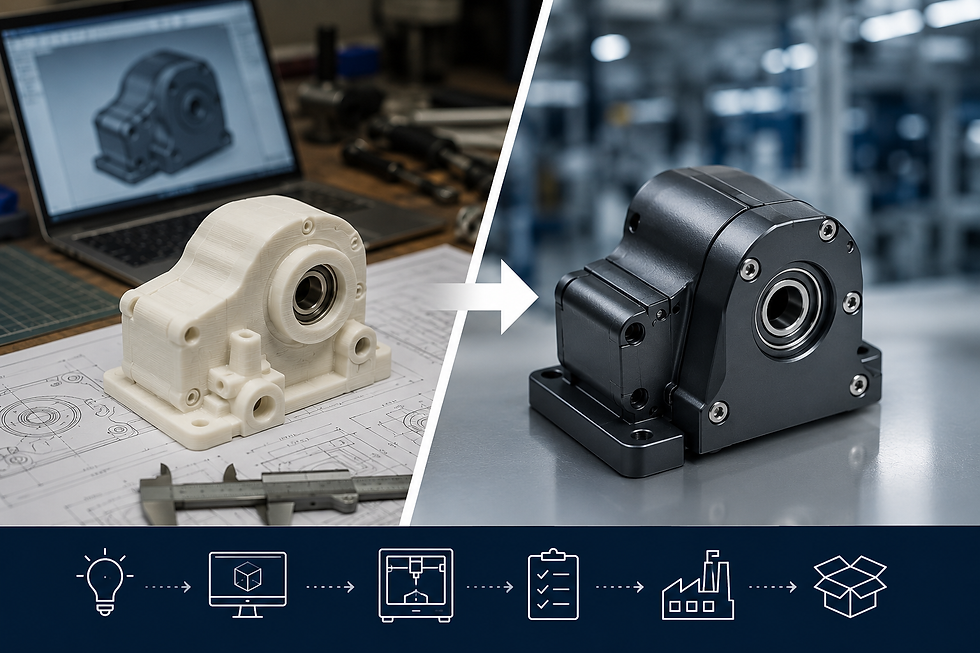
Most inventions evolve throughout development. Engineering, prototyping, testing, manufacturing, and user feedback often reveal improvements that were not apparent at the outset. Those developments may strengthen both the invention and the intellectual property surrounding it.
At the same time, waiting too long may create unnecessary challenges if the invention is publicly disclosed before an appropriate patent strategy has been considered.
The objective is not simply to file early or late. It is to file at a point that supports both the invention and the goals of the project.
A Decision Framework
Rather than asking, "When should I file?", consider the questions that usually guide the answer.
How much is the invention still changing?
Every invention develops differently.
Some are well defined from the beginning. Others continue to evolve through engineering, prototyping, testing, or manufacturing.
As development progresses, it is common to discover:
Better technical solutions
Alternative designs
Improved reliability
Simpler manufacturing methods
Additional features worth protecting
The more complete your understanding of the invention, the better positioned you are to determine what should be protected.
Are you approaching a public milestone?
Public disclosure is often an important consideration when developing a patent strategy.
Examples include:
Demonstrating a prototype
Presenting at a trade show
Meeting with investors
Launching a product
Publishing technical information
Imagine you've developed a promising prototype and have been invited to demonstrate it at an industry conference. That invitation does not automatically determine when you should file a patent application, but it does introduce an important consideration that may influence the timing of your filing strategy.
Planning ahead generally provides more flexibility than reacting after a public disclosure has occurred.
What are you trying to accomplish?
Patent decisions rarely exist in isolation.
The appropriate timing may differ depending on whether you're:
Continuing engineering development
Seeking investment
Preparing for commercialization
Evaluating a business opportunity
Building a long-term intellectual property portfolio
Understanding the broader objectives of the project helps place the patent decision in its proper context.
Common Misconception
"I should always file my patent application as early as possible."
Sometimes that's the right decision.
Sometimes it isn't.
Filing very early may protect only the initial version of an invention, even though meaningful improvements are often discovered during development. Waiting too long, however, may introduce unnecessary complications if public disclosure occurs before an appropriate filing strategy has been considered.
A more useful question is:
"Do I understand the invention well enough to protect what makes it valuable?"
Key Takeaways
There is no universal "perfect" time to file a patent application.
The decision is often influenced by the maturity of the invention, the possibility of public disclosure, and the objectives of the project.
Engineering development frequently uncovers improvements worth protecting.
Waiting too long may introduce unnecessary risk.
A thoughtful patent strategy should support both the invention and the objectives behind it.
The CAIAFA Perspective
Many people think filing a patent application is primarily a legal decision.
In practice, it is often a technology decision informed by engineering, product development, and the objectives of the project.
As an invention evolves, so does your understanding of what makes it valuable. Engineering frequently uncovers alternative designs, manufacturing improvements, and technical advantages that were not apparent at the beginning of the project. Those discoveries may become just as important to protect as the original inventive concept.
An effective patent strategy is built on understanding not only what has been invented, but also what ultimately creates lasting value.
The best patent strategy isn't defined by filing first—it's defined by protecting the innovation that creates lasting value.
About CAIAFA
CAIAFA is an engineering and intellectual property practice dedicated to helping innovators, startups, manufacturers, and investors make better technology decisions.
Every project begins with understanding the client's objectives—not fitting every challenge into the same solution. Our engineering and intellectual property capabilities are designed to stand on their own or work together, based on the goals of the client and the needs of the project.
Design. Protect. Evaluate.
This publication is provided for general educational purposes only and does not constitute legal advice, engineering advice, or any other professional advice. Every situation depends on its specific facts and circumstances.